
Pool safety plan
Cover-Pools always encourages
developing a comprehensive plan when considering swimming
pool safety. Because a Cover-Pools pool cover is convenient and easy to use, it is
an essential component of any pool safety plan.
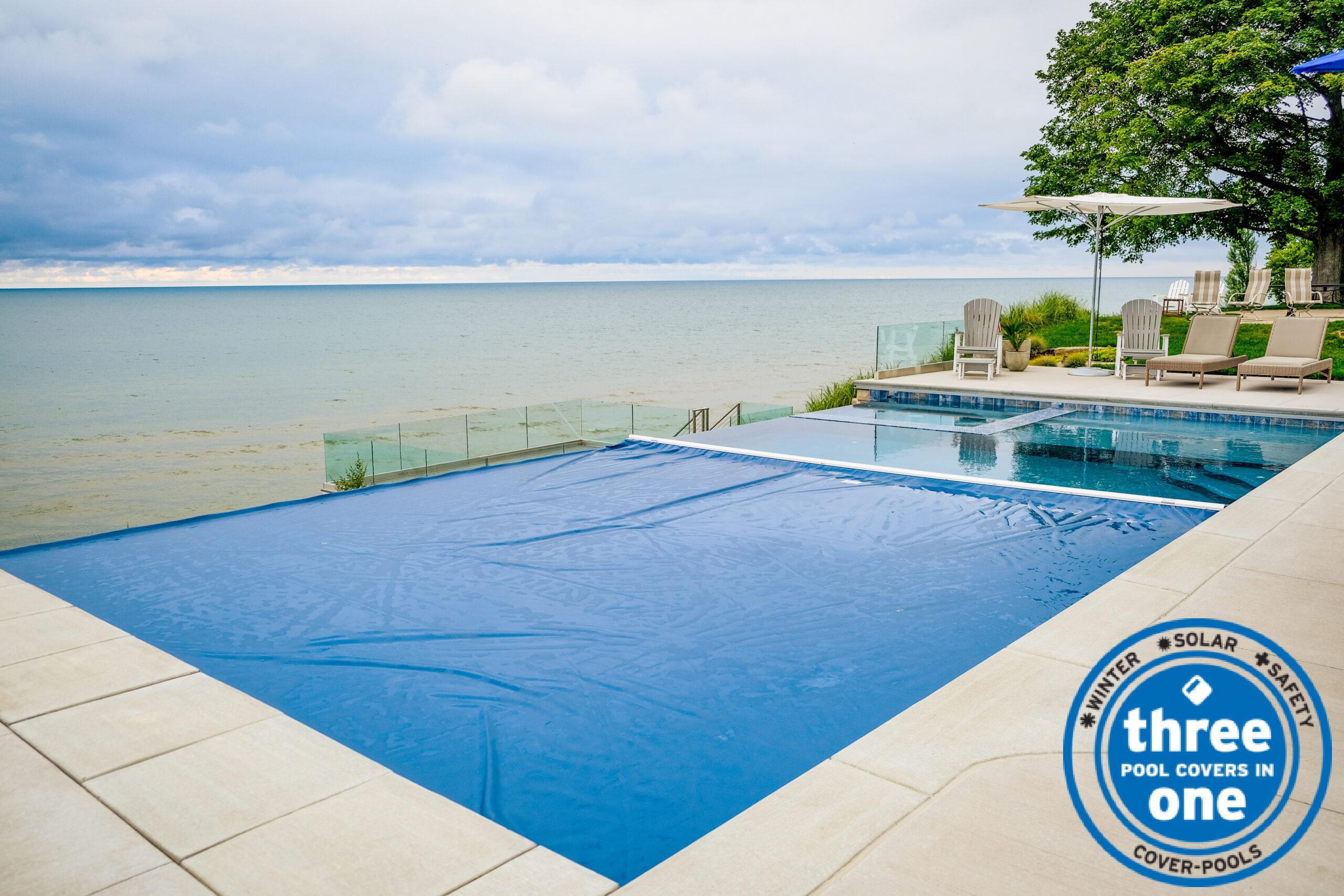
In under a minute, the automatic cover slides across the pool, creating a life-saving safety barrier between a child and the pool water. The cover makes it easy to maintain a secure, covered pool whenever the pool is not being used.
Our goal is to provide you with the safest product available. To ensure the utmost safety around your pool, we want to stress the following: Cover Pools recommends using multiple safety layers, including a safety pool cover. You should not rely on any one layer to be fail proof.
Other elements to consider in a pool safety plan include:
- door alarms
- perimeter alarms
- fences
- posted safety warnings
- safety equipment such as flotation devices
A swimming pool can provide your family with hours of entertainment and the opportunity for healthy recreation. As a pool owner, be aware that you must supervise your child for safety. There is a risk of a child drowning when around any body of water. There is no substitute for constant adult supervision. Most drowning occurs during a five-minute-or-less lapse in supervision. By providing barriers between your child and the pool, you can avoid a tragic accident should your child momentarily slip out of sight.
- Don't rely on one system—layering safety precautions provides the strongest safeguard.
- Never leave a child alone—even for a second.
- Maintain constant eye contact with your children when they are around the pool.
- Do not consider young children water-safe because they have had swimming lessons. Swimming instructions for children under three years of age are not recommended.
- Instruct baby-sitters about potential hazards to young children in and around swimming pools and the need for constant supervision.
- Train all caretakers in life-saving, cardiopulmonary resuscitation and first aid. No exceptions.
- Install a telephone pool side with emergency numbers posted.
- Keep toys away from the pool when the pool is not in use. They can lure a child into the pool.
- Use inflatable toys only under adult supervision. They may deflate or your child may slip off.
- Post and enforce rules such as No Running, No Pushing, No Dunking, and Never Swim Alone.
- Make sure you have rescue devices accessible pool side.
- Keep all doors and windows leading from the house to the pool area secure. Install self-closing mechanisms on doors.
- Enclose the pool with a barrier. In fact, fencing or a safety cover may be required in certain areas. Check your local city or county building code for more information.
- Install only child-proof, self-closing, self-latching gates around the pool.
- Vertical bars on a pool fence should be no more than three-and-three-fourths inches apart. Avoid fences such as chain link that provide footholds for little climbers' feet.
- Place table and chairs well away from the pool fence to prevent children from climbing into the pool area.
- Alert your pool maintenance people, utility personnel,and your neighbors to keep covers, gates, and doors to pool closed and locked at all times.
- Check to ensure that spa and pool covers pass minimum safety requirements set by the American Society of Testing Materials.
- Never use a pool with its cover partially in place since children may become trapped under it.
- Beware of a free-floating pool cover. A child can slip beneath one unnoticed.
- Realize that a child can drown in as little as two inches of water. Drain standing water off of your spa or pool cover.
- Investigate using a pool alarm and/or a monitoring system that can be worn by a child.
- Remove ladders and steps from above ground pools.
- No objects should be in the pool area for a child to climb on and into the water.
- Inspect safety and pool equipment regularly. Preventive devices are only effective if they are in working order.